

John Wright
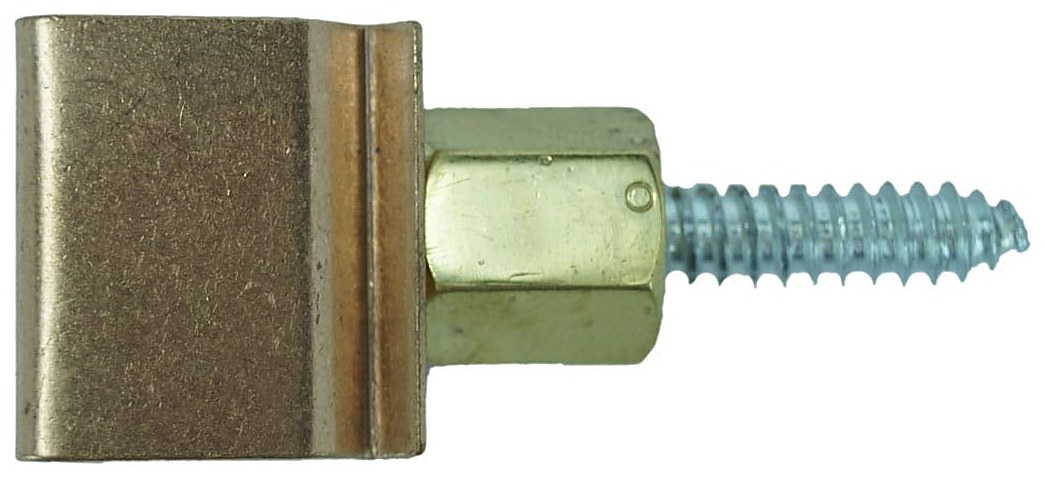
Small Bullet Catch
Item 088-470
The shallowest brass option. Suits flat trim and tight reveals.
- Standoff1 1/2"
- Size2 1/2" x 1" x 1"
- FinishBrass bullet, copper catch
- ScrewsIncluded
Hidden holdbacks
A bullet catch holds a shutter flat against the wall with nothing showing from the street. We stock seven, across John Wright and Lynn Cove. The one that fits your house is decided by a single measurement — standoff — so that is the column to read first.
| Catch | Brand | Material & finish | Standoff | Overall size | Holding force | Screws | Sold as | Order |
|---|---|---|---|---|---|---|---|---|
| Small Bullet Catch088-470 | John Wright | Brass bullet, copper catch | 1 1/2" | 2 1/2" x 1" x 1" | approx. 25 lb | Included | Pair | View |
| Large Bullet Catch088-475 | John Wright | Brass bullet, copper catch | 2" | 3 1/4" x 1" x 1" | approx. 25 lb | Included | Pair | View |
| Small Bullet Catch88-471B | John Wright | Black anodized aluminum | 1 3/8" | 2 1/2" x 1" x 1" | approx. 25 lb | Included | Pair | View |
| Large Bullet Catch88-475B | John Wright | Black anodized aluminum | 2" | 3 1/4" x 1" x 1" | approx. 25 lb | Included | Pair | View |
| Copper Catch OnlyJW88-476 | John Wright | Copper catch, no bullet | — | 1 15/16" x 1 1/4" | — | — | Single catch | View |
| Hidden Stay, StainlessESS58 | Lynn Cove | Polished stainless steel | 1 1/4" | 3" long, bracket 1" x 7/8" | — | Included | Pair | View |
| Hidden Stay, RubberRB774 | Lynn Cove | Moulded rubber | — | 1 1/2" diameter | — | NOT included | Pair | View |
Standoff is the gap the catch holds between shutter and wall. Holding force is the manufacturer’s figure per catch; Lynn Cove does not publish one for the ESS58. Mounting screws come with every catch except the rubber hidden stay (RB774), which is supplied without them. On a phone the table shows standoff and size; the rest is on each card below.
John Wright
Item 088-470
The shallowest brass option. Suits flat trim and tight reveals.
John Wright
Item 088-475
Same catch on a longer hex body, for deeper trim or thicker siding. Photo shows the brass and copper finish.
John Wright
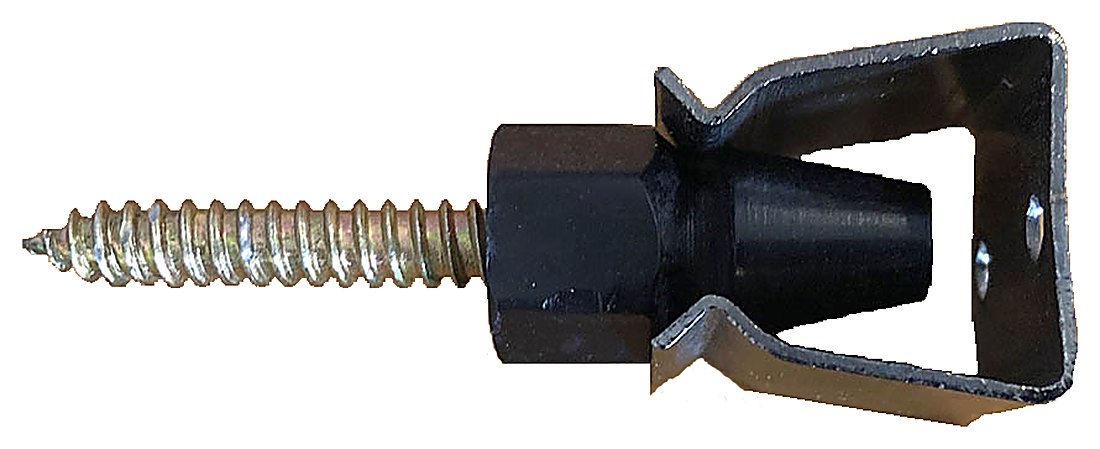
Item 88-471B
A wrap-around bracket rather than a flat clip. Disappears against dark shutters.
John Wright
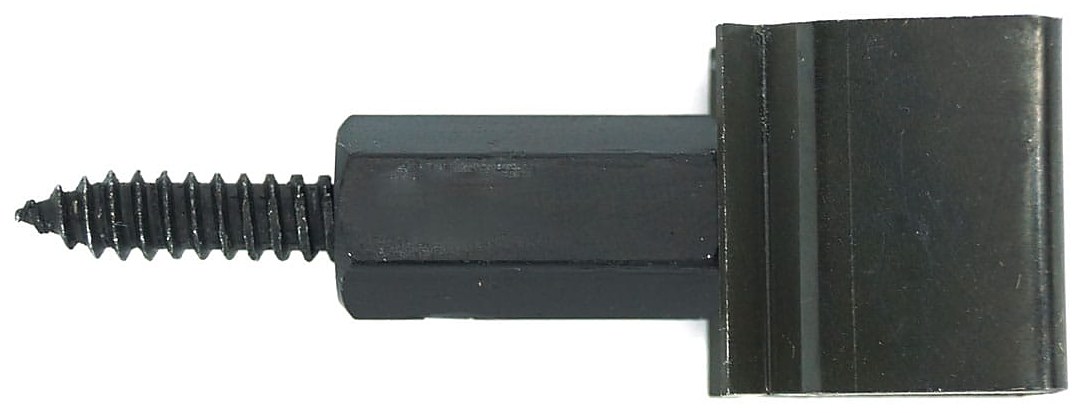
Item 88-475B
The black equivalent of the 2" brass catch.
John Wright
Item JW88-476
A spare catch for a shutter that already has its bullet fitted. Shown above fitted to a bullet — this item is the catch alone.
Lynn Cove
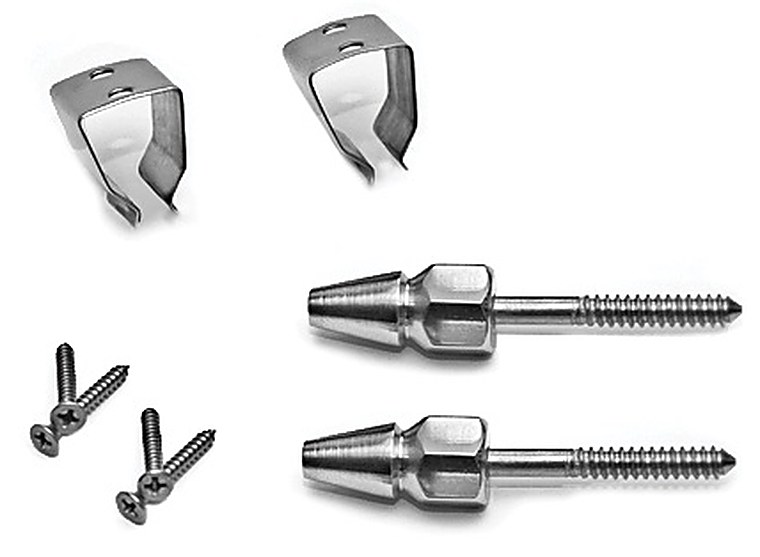
Item ESS58
Stainless throughout, so it is the one to pick on the coast.
Lynn Cove
Item RB774
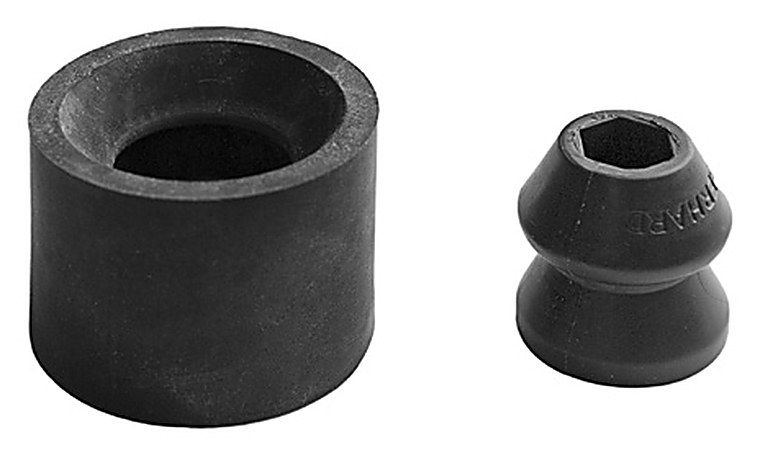
A rubber sleeve and plug that grip by friction rather than a spring. Nothing to corrode and it lands quietly. Mounting screws are not included.
Catch goes on the shutter
The catch screws to the outer corner of the shutter, on the edge nearest the building, with its longer side horizontal. It is the half that does the gripping.
Bullet goes on the house
The bullet screws into the wall where it lines up with the centre of the catch. Its length sets the standoff — how far the open shutter sits off the siding — which is why that measurement matters more than the finish.
Push to hold, pull to release
Swinging the shutter back springs the catch open over the bullet and it grips. A firm pull releases it. Nothing is visible from the front of the shutter.
The catch is on the shutter and the bullet is screwed into the wall behind it, so from the street there is nothing to see.
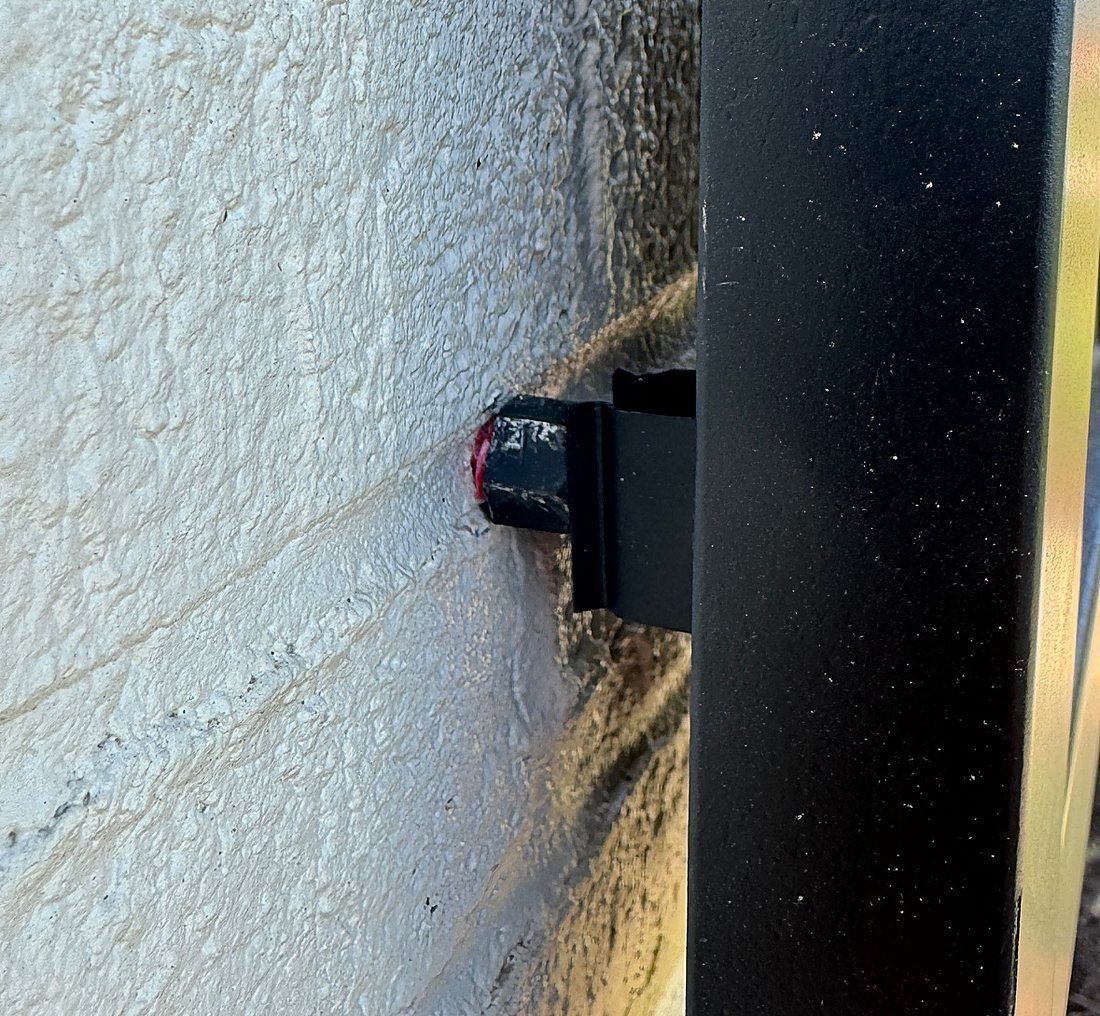
The sequence is the same for every catch on this page. The drill sizes quoted are John Wright’s, from their own instruction sheet; for the Lynn Cove catches, size the pilot hole to the screws you are using.
Offer the shutter up and check the fit
Open the shutter most of the way. The catch goes on the outer corner of the shutter, on the edge closest to the building, with its longer side horizontal. Check that the standoff suits the gap, and that the bullet will land somewhere flat — not across a lap edge, a mortar joint or a trim return.
Mark and fit the catch
Mark both screw holes. Drill 1/16" pilot holes and screw the catch to the shutter. John Wright supplies two Phillips and two flat-head No. 4 screws; use whichever head you prefer.
Find where the bullet goes
Drop the bullet into the centre of the fitted catch, then swing the shutter gently closed until the bullet’s screw touches the wall. That contact point is the bullet’s position. Mark it.
Drill and fit the bullet
Drill a 1/8" pilot hole and screw the bullet home. In masonry, drill for a conical anchor, tap it in and drive the bullet into that. The John Wright screw is 1" long, so set the anchor depth accordingly.
Test it, then adjust
Swing the shutter onto the catch several times. It should snap on and come off with a firm pull. Too tight or too slack, back the bullet out or in by a turn and test again.
Non-functional shutters can be hung on four catches, one at each corner, instead of being screwed through the face. Nothing shows from the front and the shutter lifts off without tools — useful before a storm or a repaint.
Sunbelt sells these by the pair, so an order contains two complete sets — enough for one pair of shutters.
Figures above are John Wright’s, for the brass and copper catches. The black anodized catches share the same dimensions and holding force.
Open the shutter flat against the wall and measure from the siding to the back face of the shutter. That gap is the standoff you need. On flat trim or smooth siding it is usually close to 1 1/4" to 1 1/2"; over lap siding, a mounting block or thick casing it is nearer 2".
If you are between sizes, go to the longer standoff. A catch that is slightly proud still holds; one that is too short never reaches.
The stainless hidden stay is the only one of the seven with a published drawing. Overall length is 3", the bracket is 1" x 7/8", and both mounting holes are 1/4" on 5/8" centres.
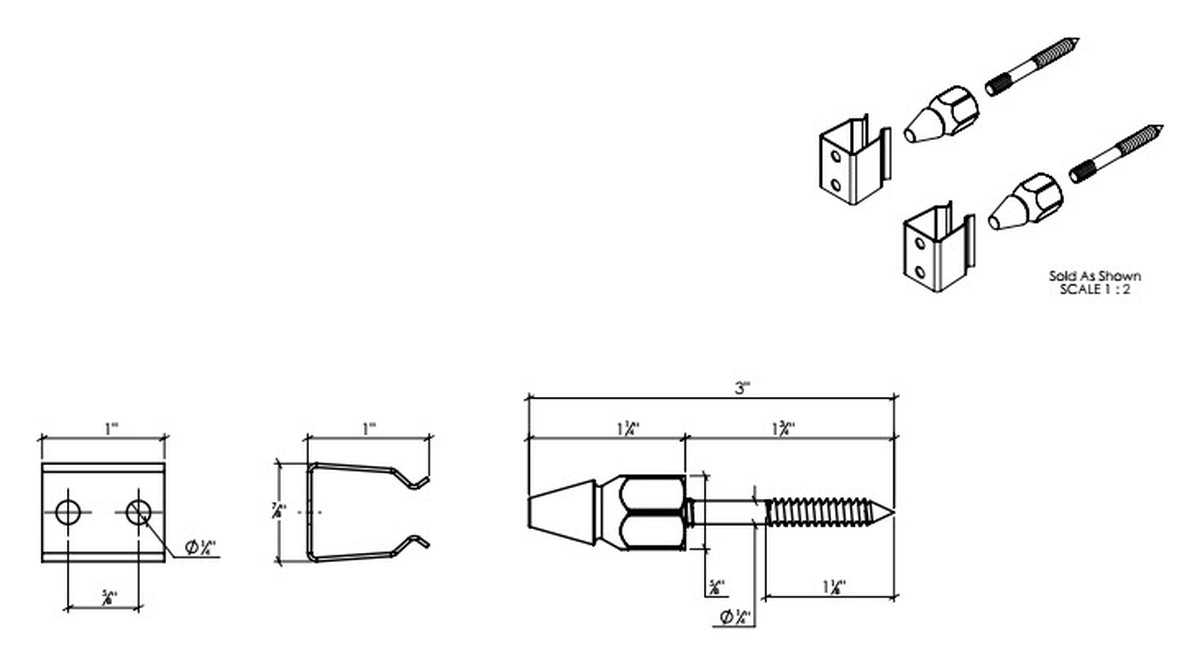
A bullet catch is a two-part spring holdback. The catch screws to the shutter and a tapered bullet screws into the wall. Push the shutter back and the catch snaps over the bullet, holding it open without a visible shutter dog.
Standoff is the distance the catch holds the shutter off the wall. Measure how far your shutter sits proud of the siding when it is open, then pick the catch that matches. Too short and the shutter will not reach the catch; too long and it will rattle.
Every catch on this page is sold by the pair except the copper catch only (JW88-476), which is a single replacement catch. Mounting screws are included with every one except the rubber hidden stay (RB774) — that one is supplied without screws, so add your own.
The John Wright catches hold at roughly 25 lb each, which is enough to keep a shutter tidy in normal weather. They are a holdback, not a storm fastening. If you need the shutter to stay put in a storm, use a slide bolt or a shutter locking bolt as well.
The stainless ESS58 is a sprung metal bracket that clicks onto a bullet and holds firmly. The rubber RB774 is a moulded sleeve and plug that grip by friction: softer, quieter, and with nothing to rust, but a gentler hold. The rubber stay does not come with mounting screws.
Prices, finishes and quantities live on the two order pages.
John Wright Bullet Catches Lynn Cove Hidden Stays
Not sure which fits? Call 1‑888‑778‑4774 with a photo of your trim and we will match it for you.